Skip to content
SCRIVAI
EN
Request information

Master's in Cognitive Psychology and Neuroscience with AI

Format:  100% online with simulations and weekly challenges applied to real professional environments.

Duration: 24 weeks of intensive training + 8 weeks for a final project with measurable results.

Understand the mind through its functional architecture and apply AI-enhanced neurocognitive models in real-world environments

Advanced education for professionals seeking to transform analytical models by integrating automation, strategic analysis, and scalability.


Why pursue the Master's in Cognitive Psychology and Neuroscience with AI?

Immediate application and professional validation

Each module requires practical intervention, solution design, and measurable results. SCRIVAI's methods emphasize execution rather than passive accumulation of knowledge.

Immediate application and professional validation

You learn from day one through functional challenges. We do not repeat what no longer works. SCRIVAI trains you to solve problems as an active professional, not remain a passive theorist.


Employability supported by evidence of real capabilities

We align with employment channels that prioritize profiles with applied evidence, strategic thinking, and real AI proficiency. This master's program strengthens your immediate employability.

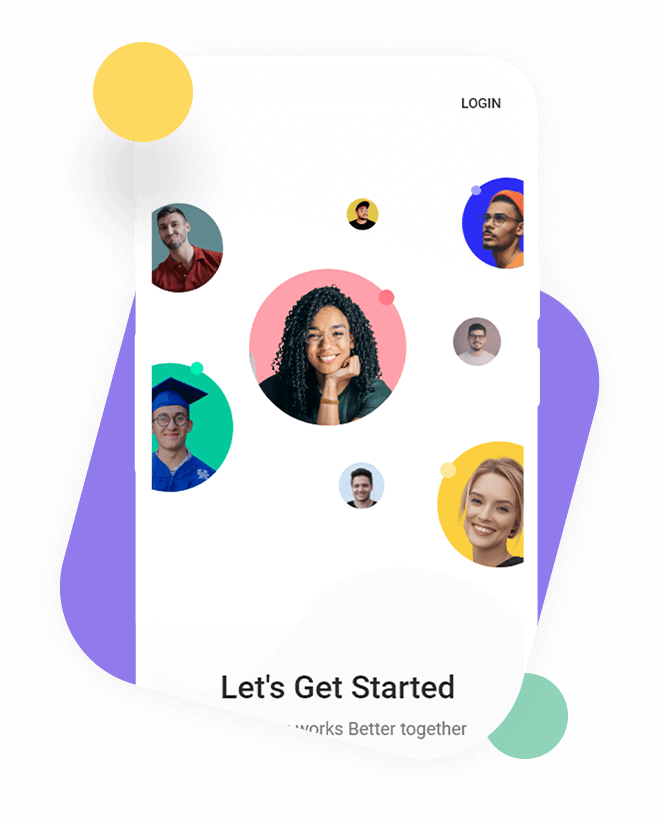
SCRIVAI learning environment illustrating the integration of technology and advanced pedagogy for the Master’s in Cognitive Teaching with AI.

Structured education designed to help you intervene, measure, and transform from the first module

Structure of the Master's in Cognitive Psychology and Neuroscience with AI

Before reviewing the academic structure, it is important to understand that this master's program was not designed to accumulate theory, but to change the way you analyze, intervene, and act. Each week places you in real scenarios where you must apply neurocognitive frameworks, functional models, and AI tools for concrete purposes.

The structure is not oriented toward passive content retention, but toward developing applied, strategic, and functional thinking from a rigorous scientific foundation. It is education for informed intervention.

Master's in Cognitive Psychology and Neuroscience with AI

Professionals who applied neuroscience knowledge with AI to achieve tangible results in real contexts.

Every challenge placed me in real scenarios. I now design programs based on neurocognitive principles and use AI to personalize learning processes within my team.

Jaime Isaguirre Human Development Specialist – Organizational Consulting

I learned to integrate neuroscience and AI to improve teams' cognitive well-being and lead interventions with sustained impact. It is an extraordinary master's program!

María Angélica Celis Regional Director of Learning – Education Sector

I use cognitive models and digital tools to anticipate mental blocks and improve clinical decision-making.

Melissa Andrade Organizational Psychologist – Healthcare Sector

I optimized recruitment, workplace climate, and training processes by applying adaptive neuroscience principles and AI-based solutions. I highly recommend it!

José Luis Talent and Workplace Climate Lead – Multinational Retail Company

Curriculum for the Master's in Cognitive Psychology and Neuroscience with AI

From brain fundamentals to the design of intelligent cognitive solutions

Module 1. Foundations of Cognitive Psychology and Applied Neuroscience

• Functional principles of the brain and their relationship to behavior
• Classical and contemporary cognitive models

• Connections between neuroscience and learning

• Higher mental processes: attention, memory, language, and decision-making

• Introduction to neural-pattern analysis
Applied module challenge: Analyze a real case using cognitive models and relate it to specific brain structures.

Module 3. Designing Adaptive Learning Environments with AI

• Artificial intelligence in the development of personalized educational programs

• Application of cognitive models in adaptive systems

• Real-time assessment of neurocognitive performance

• Human-machine interaction for the development of cognitive skills

• Use of data to optimize neurocognitive learning environments
Applied module challenge: Design a digital adaptive-learning environment based on neurocognitive profiles.

Module 5. Data- and Simulation-Based Cognitive Intervention

• Design of personalized interventions based on artificial intelligence
• Monitoring cognitive progress through automated metrics
• Simulation of cognitive scenarios for therapeutic validation
• AI applied to neurodevelopmental disorders and cognitive decline
• Generation of automated cognitive-progress reports
Applied module challenge: Develop an automated cognitive-intervention proposal for a specific clinical case.

Module 2. AI Technologies for Cognitive and Brain Analysis

• Use of algorithms to process neuropsychological data

• AI tools applied to imaging, EEG, and biomarkers

• Detection of anomalous patterns in mental processes using AI

• Foundations for training predictive cognitive models

• Ethical integration of AI in clinical and educational environments
Applied module challenge: Create a basic AI-assisted cognitive-analysis model using simulated brain-activity data.

Module 4. Emotional Neuroscience and Predictive Behavior

• Emotional regulation and the neural networks involved
• Influence of emotions on decision-making
• Detection of emotional states through AI
• Behavioral prediction in clinical and educational contexts
• Analysis of correlations among emotions, language, and neuroplasticity
Applied module challenge: Build a model that detects emotional states from verbal and physiological expressions.

Module 6. Final AI Neurocognitive Implementation Project

• Planning a case study using neuroscience and AI tools

• Real-world application in a clinical, educational, or research environment

• Integration of predictive models, simulations, and impact measurements

• Ethical, scientific, and functional validation of the project

• Presentation of the project before an academic evaluation committee
Final Challenge: Implement a validated neurocognitive intervention project with measurable and replicable results.

What questions do you have?

Find key answers about the program

How is a SCRIVAI master's program different from a traditional university program?

Our master's programs are not based on outdated theory. From the first module, you work through real challenges, combining human and artificial intelligence to make decisions as you would in the professional world.

Do I need prior knowledge of artificial intelligence?

No. Each master's program is designed for professionals from any discipline. We guide you from the fundamentals to applied AI use in your field, with a practical and personalized approach.

Are the master's programs fully online?

Yes. All content is 100% online, but designed so you are never learning alone. You will have strategic support, access to simulations, guided projects, and an active executive community.

What does it mean that the master's programs are challenge-based?

You will not learn through theoretical exams. Each module includes real challenges that simulate executive decisions using AI tools. Learning is activated through action, not memorization.

What happens after I complete the master's program?

You receive one year of access to the SCRIVAI community: ongoing updates, résumé guidance, job opportunities, networking, and priority access to companies recruiting AI-skilled talent.

What supports these master's programs if SCRIVAI is not a traditional university?

SCRIVAI is an advanced education ecosystem backed by more than 15 years of experience in applied learning. We do not issue conventional degrees; we deliver demonstrable outcomes and real professional development.

ACADEMIC GUIDANCE

Find the right master's program for your professional path

Tell us about your profile, goals, and the area where you want to apply artificial intelligence. We will guide you through the available SCRIVAI University programs.

Request information